

Main Street Economics Responds to Historic Gold and Silver Price Surge
Economic Education for the American Public

Leslie A. Rubin, Founder and President, Main Street Economics
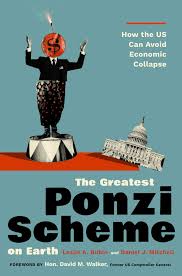
The Greatest Ponzi Scheme on Earth: How the US Can Avoid Economic Collapse

Our Ship of State
Markets Signal Growing Concern Over U.S. Debt and Fiscal Sustainability
“These price levels are not random, speculative, or accidental,” Rubin said. “They represent a clear warning from the open markets.”
Gold and silver have surged to historic highs as investors around the world move toward tangible assets amid rising concern about inflation, currency risk, and the long-term sustainability of government debt. These developments reflect a profound shift in investor behavior away from abstract financial instruments and toward assets with intrinsic, historical value.
“When investors move into precious metals, they are making a statement,” Rubin said. “They are choosing tangible assets over confidence in government balance sheets. They are voting with their capital for security and stability at a time when trust in fiscal policy is eroding.”
According to Rubin, the precious metals rally must be viewed in the broader context of mounting fiscal pressures facing the United States. The federal government now carries approximately $38.5 trillion in interest-bearing debt, a figure projected to reach $40 trillion this year and nearly $70 trillion within the next decade. Unfunded obligations tied primarily to Social Security and Medicare exceed $100 trillion, while trust funds supporting those programs are projected to be depleted in less than seven years.
“Our debt-to-GDP ratio stands at roughly 125 percent, the highest level in American history,” Rubin said. “Despite this, federal projections continue to show multi-trillion-dollar deficits stretching indefinitely into the future. This is not a temporary imbalance. It is structural fiscal irresponsibility.”
Rubin noted that the precious metals surge is only one of several warning signals emerging from the markets. Long-term Treasury yields have risen even as short-term rates decline, a divergence that reflects growing concern about long-term fiscal risk. The U.S. dollar has weakened against major currencies, and traditional assumptions about the safety of U.S. government debt are increasingly being questioned.
“Markets are not political,” Rubin said. “They do not posture or engage in wishful thinking. They respond only to risk and reality. When markets move in unusual and persistent ways, they are telling us something important.”
Main Street Economics cautions that the next economic downturn may not resemble those of the past. For decades, Washington has relied on borrowing to postpone difficult decisions, spending more whenever problems arise. That strategy depended on unwavering confidence in U.S. debt, confidence that is now being tested.
“If the next crisis arrives and our borrowing capacity is gone, there will be no painless solution,” Rubin said. “Massive austerity would be economically crushing. Default would undermine global financial stability. Printing money endlessly would destroy the dollar’s purchasing power. None of these outcomes are acceptable.”
Rubin emphasized that the current moment still allows time to act, but that window is narrowing.
“When experts warn us, when government projections warn us, and when global markets begin to echo the same message, denial is no longer an option,” he said. “Fiscal sanity is not a partisan issue. It is a prerequisite for long-term economic stability.”
Main Street Economics urges policymakers to address the underlying drivers of this growing market anxiety by restoring fiscal discipline and confronting the nation’s long-term debt trajectory honestly and responsibly.
“Markets have begun to speak clearly,” Rubin said. “We would be wise to listen before they speak even louder.”
About Main Street Economics
Main Street Economics was formed to provide Economic Education for the American public. We focus on explaining the fiscal problems we face and basic economics in easy-to-understand language by laymen for laymen without formal education in economics. For more information on Main Street Economics and its initiatives, please visit https://www.mainstreeteconomics.org and follow on X at @MainStreetEco.
To schedule an interview with Les Rubin, please contact Dan Rene at 202-329-8357 or dan@danrene.com.
Dan Rene
Dan Rene Communications
+1 202-329-8357
email us here
Visit us on social media:
TikTok
X
This Main Street Economics video contrasts economic paths of Poland and Venezuela, starting with their situations in the 1990s. http://mainstreeteconomics.org/
Legal Disclaimer:
EIN Presswire provides this news content "as is" without warranty of any kind. We do not accept any responsibility or liability for the accuracy, content, images, videos, licenses, completeness, legality, or reliability of the information contained in this article. If you have any complaints or copyright issues related to this article, kindly contact the author above.
