

Mining & Metals: Price, Grade and Processing Determine Our Future
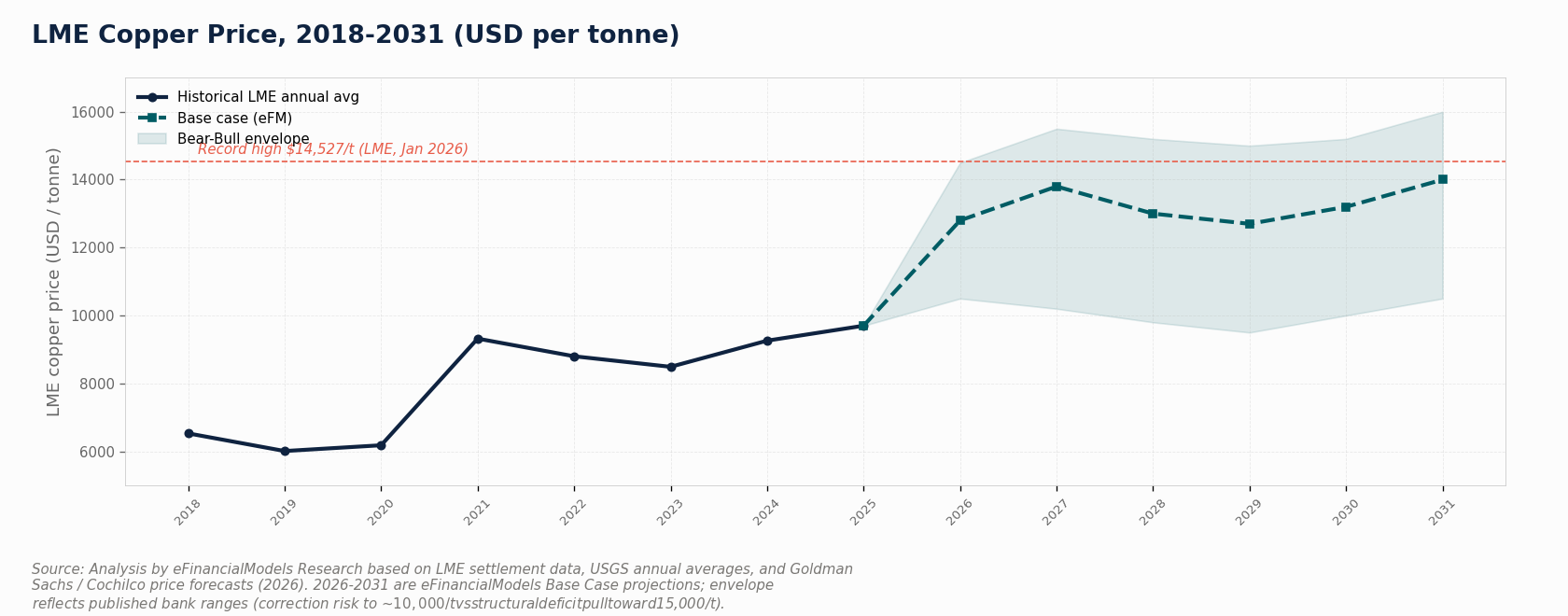
LME copper price reached a record near $14,500 per tonne in early 2026, with a structural deficit pulling toward $15,000 — one of the price signals the studies model through 2026–2031.
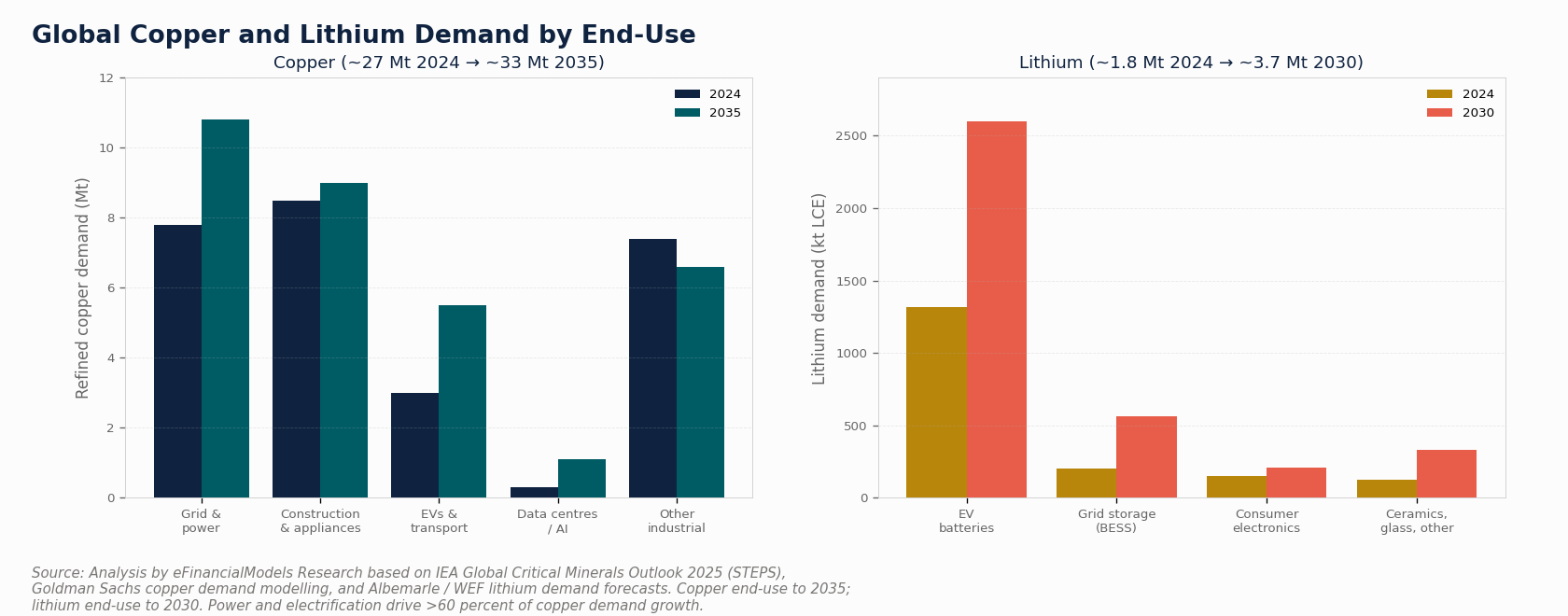
Global copper and lithium demand by end-use: power grids, electric vehicles, and AI data centres drive the growth the studies forecast to 2035.
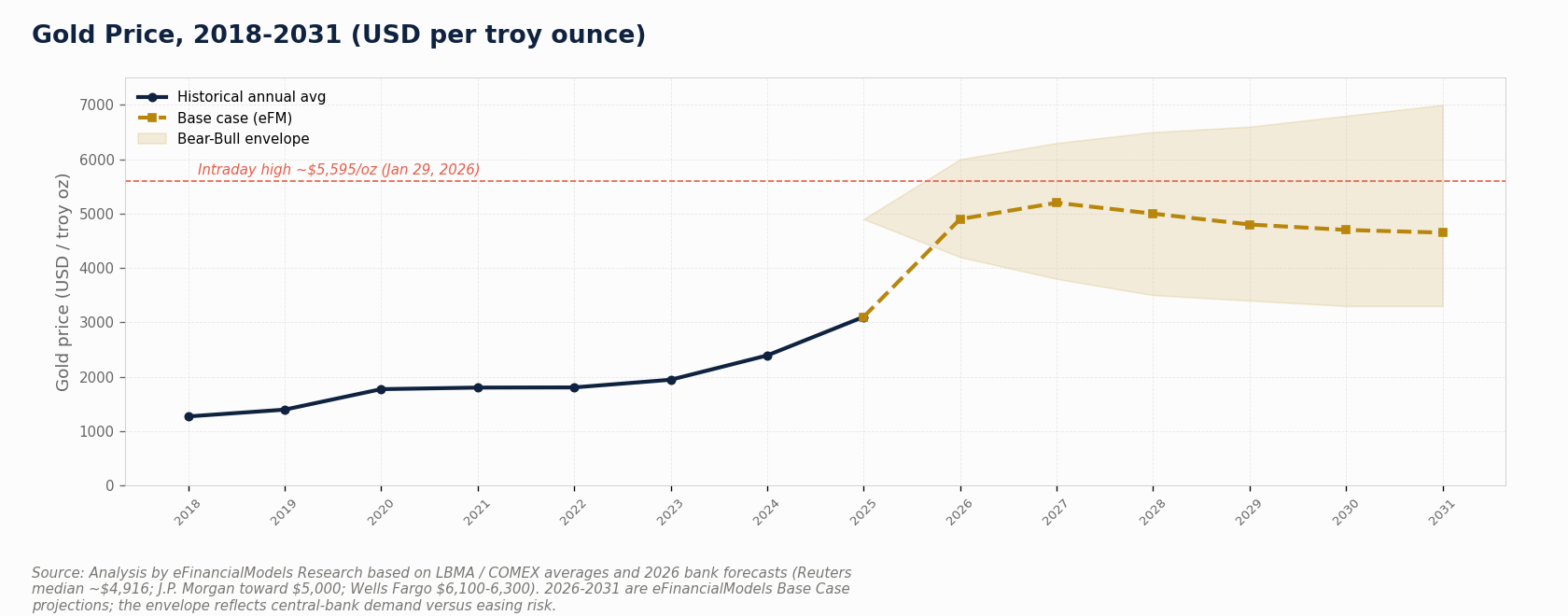
Gold reached an intraday high near $5,600 per ounce in early 2026, reshaping the economics of gold and polymetallic assets across the studies.
New 2026 to 2031 Mining Market Studies span six leading jurisdictions: record metal prices, structural deficits, and returns driven by price over volume.
Covering six of the world’s leading mining economies across the Americas, Africa, and the Asia-Pacific, the studies document an industry where demand is running ahead of supply. The studies report that copper reached a record of about $14,500 per tonne in early 2026 and cite International Energy Agency projections that copper supply could fall short of demand by roughly 30% by 2035. According to the studies, ore grades are falling, and output is flat or declining in several leading copper nations even at record prices, making realized price and cost position, rather than production growth, the primary variables in determining returns.
According to eFinancialModels Research, “For twenty years, the mining story was about volume: find more, dig more, ship more. Over the next five years, our studies indicate returns will hinge more on price, grade, processing, and policy than on production growth. The studies are intended to help teams assess those differences before they commit capital.”
KEY FINDINGS ACROSS THE STUDIES
Across the markets covered, the studies identify several factors that influence project returns:
• Structural deficits: The studies report that copper and the wider battery-metals complex face demand running ahead of supply, citing an IEA estimate of a roughly 30% copper shortfall by 2035.
• Price over volume: The studies note that in several leading copper nations, record prices sit alongside flat or falling output, so returns hinge on realized price and cost position rather than production growth.
• Precious metals as a hedge: The studies report that gold reached an intraday high near $5,600 per ounce in early 2026, reviving marginal ounces and extending mine lives across gold and polymetallic assets.
• Processing as the new prize: The studies find that value is shifting downstream, from mining ore to refining it, as governments increasingly tie incentives and market access to domestic processing.
• A new demand engine: The studies identify electricity grids, electric vehicles, and AI data centers as the dominant pull on copper, lithium, and uranium demand.
The studies provide jurisdiction-by-jurisdiction analysis intended to help entrepreneurs, developers, and investors evaluate mining opportunities on a comparable basis. Readers can find the full series in the market studies library.
Communications Team eFinancialModels
eFinancialModels
email us here
Legal Disclaimer:
EIN Presswire provides this news content "as is" without warranty of any kind. We do not accept any responsibility or liability for the accuracy, content, images, videos, licenses, completeness, legality, or reliability of the information contained in this article. If you have any complaints or copyright issues related to this article, kindly contact the author above.
